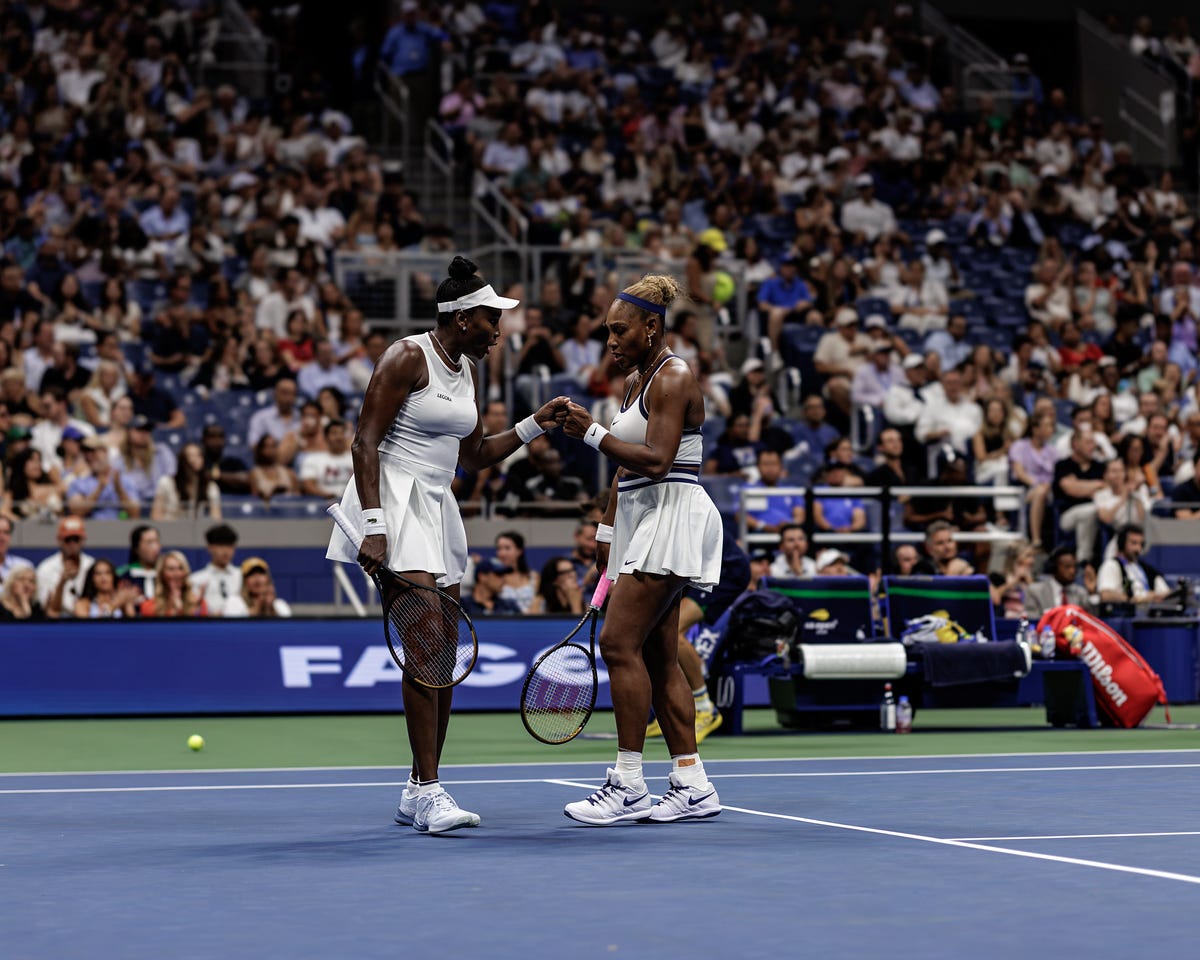
NEW YORK — I thought about saving this for a post-U.S. Open notebook item, but since there’s been a lot of discourse around it today, I thought it’d be useful to report the details I’ve learned about what transpired on Friday night after the Williams sisters lost their doubles match.
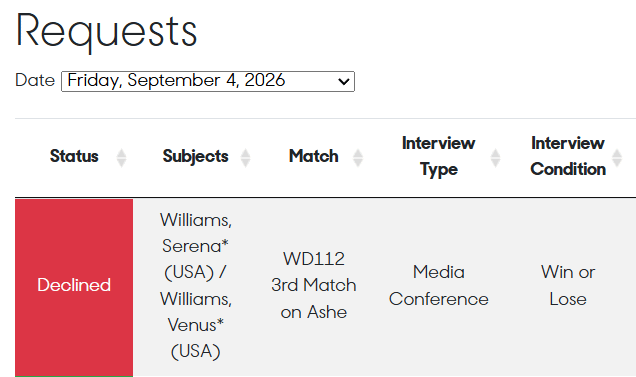
Venus and Serena Williams had been requested, as a pair, for a post-match press conference, a standard post-match obligation which is required of all players in the Grand Slam rulebook if requested by media. Many reporters, I gather, had filed such a request on the tournament’s media operations system; I was one of them.
But within minutes of the match ending, the USTA sent credentialed media a message that “Serena and Venus Williams will not be available for press tonight.”
As someone who has been covering them for a long time, the update was entirely unsurprising.
The vast majority of players will skip out on press zero times in their career, out of some combination of a sense of obligation and an aversion to the possible fines that are threatened for breaking the rules.
But as we know, the Williamses, in many ways, are not like other players. Between them, I could easily count 15-20 times when they haven’t shown up to press like other players would’ve. Sometimes they’ve incurred fines; the biggest one, to my knowledge, was the $5,000 that Venus was dinged for skipping out on press after a first-round loss at the 2016 Australian Open. Fines aren’t usually published for WTA Tour events; they normally are at Grand Slam events.
Sometimes, particularly later at night, tour officials implicitly encourage media to withdraw requests for known-sensitive players, including the Williamses, when they’re losing. They gently warn that the player will surely be in no mood to talk after a loss. Usually, in my experiences, the reporters oblige this ask and retract the request—I’ve done it myself, sometimes.
But the various requests for the Williamses on Friday night stayed in the system. And that makes sense: they were U.S. Open headliners on Friday night, commanding the stage and holding the attention of the Arthur Ashe Stadium audience like no one had done so far at this U.S. Open. There were major unanswered questions about each of their futures. They’d spoken to reporters in Cincinnati after their first-round doubles loss there. Venus, also, had spoken to reporters late at night after her first-round singles loss in New York earlier this week.

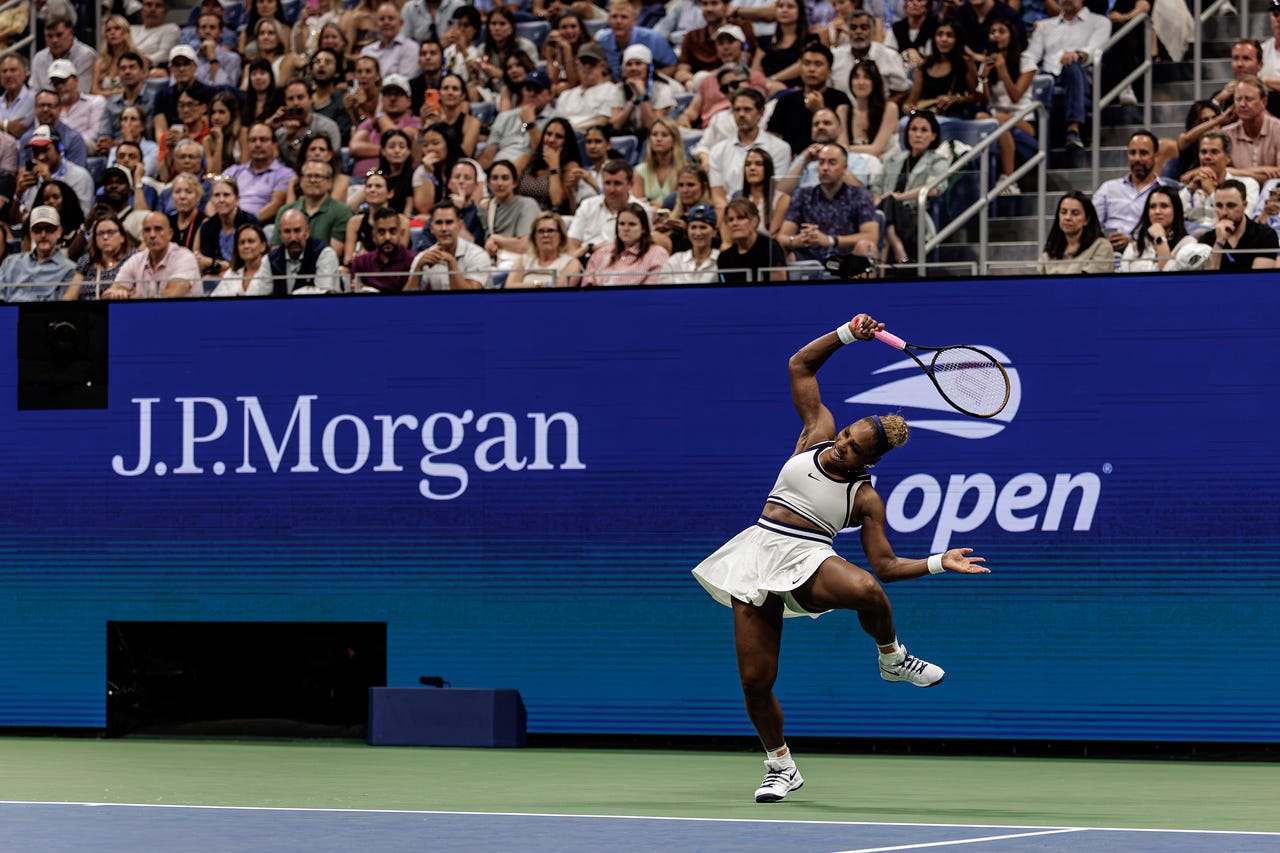
But on Friday night, Bounces has learned, speaking to media was a non-starter for the sisters. Well, specifically, one sister. After waving to the crowd as she walked off Ashe, Serena fled the scene as fast as she could. Serena strode straight from the court out of the stadium and into a car, riding away into the New York City night without pause.
In her haste, Serena left behind Venus, who had stayed and gone to the locker room like players normally do after a match. Venus might well have been amenable to doing post-match press that night, but the tournament wasn’t going to make her do it by herself on behalf of a doubles pair after Serena had gone AWOL. (It is possible to request just one player from a doubles match for press, but I—and other reporters, presumably—had requested the team of two.)
A day later, the USTA told Bounces on Saturday that neither Serena nor Venus would be fined for skipping press a day earlier.
Any decision to issue a fine for a code violation—and skipping press without an excuse such as an injury or illness counts as a code violation—is ultimately discretionary, and the U.S. Open is using its discretion to not sanction these stars, despite Serena’s violation being quite textbook.
There is surely a degree of seniority or favoritism at play here, and it can be debated whether or not that’s “fair.” Venus and Serena have been enormous assets to tennis, after all; why jeopardize their relationship with the tournament with a little rulebook enforcement?
To my knowledge, all the players who were requested for press on Saturday did come in—including several American players on the tough end of very stinging losses.
Amanda Anisimova, who had made the final here a year ago, lost in straight sets to Anastasia Potapova on Armstrong. The loss will drop Anisimova out of the Top 10 after a 14-month residency, but she was perhaps the most upbeat of the players I’ll discuss here.
“I feel like I was playing quite well this week, and definitely finding my level again,” Anisimova said. “So I felt like there were a lot of positives. Today it was really tricky with conditions, and like I said, she played well. So yeah, it was just not my day today.”
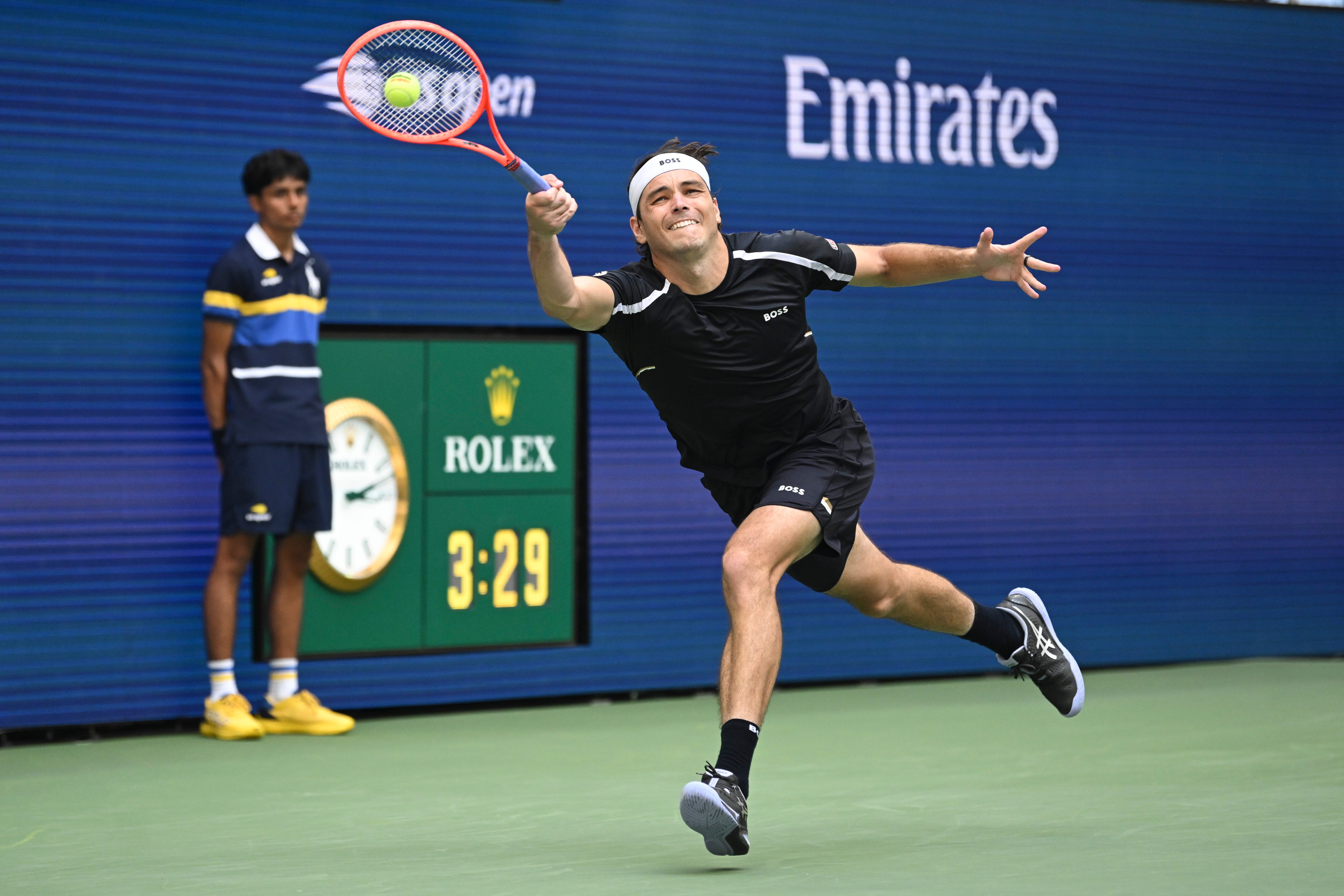
Taylor Fritz, who had dominated Mattia Bellucci 6-0, 6-1, 6-1 in the previous round, led two sets to none in a choppy match against Francisco Cerundolo to start the day’s action on Ashe. But as Fritz’s errors increased, his lead slipped and he fell to an eventual 3-6, 4-6, 6-3, 6-4, 6-4 defeat.
“I don’t even know what to say,” Fritz said of his disappointment. “I don’t really want to talk to anybody, see anybody. I kind of just need to, like, get out for a couple days and then just kind of get back to work. I don’t know how I let that happen today.”
Madison Keys suffered an even more dramatic collapse on the scoreboard. After blitzing the first set, Keys led Zheng Qinwen 5-0 in the third set and held a match point at 5-1, only to ultimately lose seven games in a row to fall to a stunning 1-6, 7-6(3), 7-5 defeat.
“I felt like I couldn’t play tennis anymore,” Keys said. “It just felt like it was a much bigger deal than playing a tennis match, all of the sudden.”
Keys had made it to press about an hour after the match, still feeling raw for reasons that seemed larger than this one loss.
“I obviously got off to a really good lead, and then… I just… got really—I mean, got really scared?” she said. “Like, I couldn’t swing. I don’t know. Tennis just feels really hard right now, so I feel like that kind of took over.”
Keys spoke in terms that were unspecific yet drastic.
“I just feel like I’ve kind of been struggling for a while now, and I feel like I was able to kind of play through it for a bit,” she said. “I’m sure everyone could kind of see that I was struggling a little bit. But inside, it felt probably even bigger than that.
“Yeah, some weeks are easier than others, and this [U.S. Open] week is obviously one of the harder ones just because you care so much. Yeah, I’m going to have to make some sort of changes.”
Asked to follow up on those “changes,” Keys spoke to the non-stop nature of the circuit.
“I think it's been something that's been building for a while,” she said. “I just kind of keep pushing it off and pushing it off just because that's how the tennis world works. It's just to the point where I actually need to do something about it.”
Seven more Americans are in action in Sunday’s fourth-round singles matches; in fact, only one of the eight singles matches doesn’t feature an American. (The 10 Americans who reached the fourth round in singles is the most since 2002.)
To read up on the five matches I’ve picked as matches to watch—and to get all the rest of Bounces’ U.S. Open coverage—please become a paid subscriber! It’s still 15 percent off during the U.S. Open, but there’s only a week or so of that left!
Thanks to everyone who’s subscribed recently and pushed Bounces to the top of the daily Substack Sports chart on Friday!