


NEW YORK — Ben Shelton’s first-round win over Tallon Griekspoor on Monday night was a twisty ride: the pair exchanged breadsticks before the American edged a critical third set and ultimately rolled to a 1-6, 6-1, 7-6(3), 6-2 victory.


Thanks to Lev Akabas, data reporter at Sportico, we have a new way to understand just how unusual this match was: it was Scorigami!

Akabas has ported Scorigami, a popular device from American sports that was invented by sportswriter Jon Bois for the NFL in 2014 into tennis social media.
For those who haven’t learned of it in other arenas, Scorigami is a term for when a sporting event has a final score that has never happened before in the history of the league. For the original NFL version, the final scores of two teams are at play. In this chart, the winning team’s scores are the columns while the losing team’s scores are the rows. Squares marked green have previously been the final score of an NFL game; white squares have not happened yet.
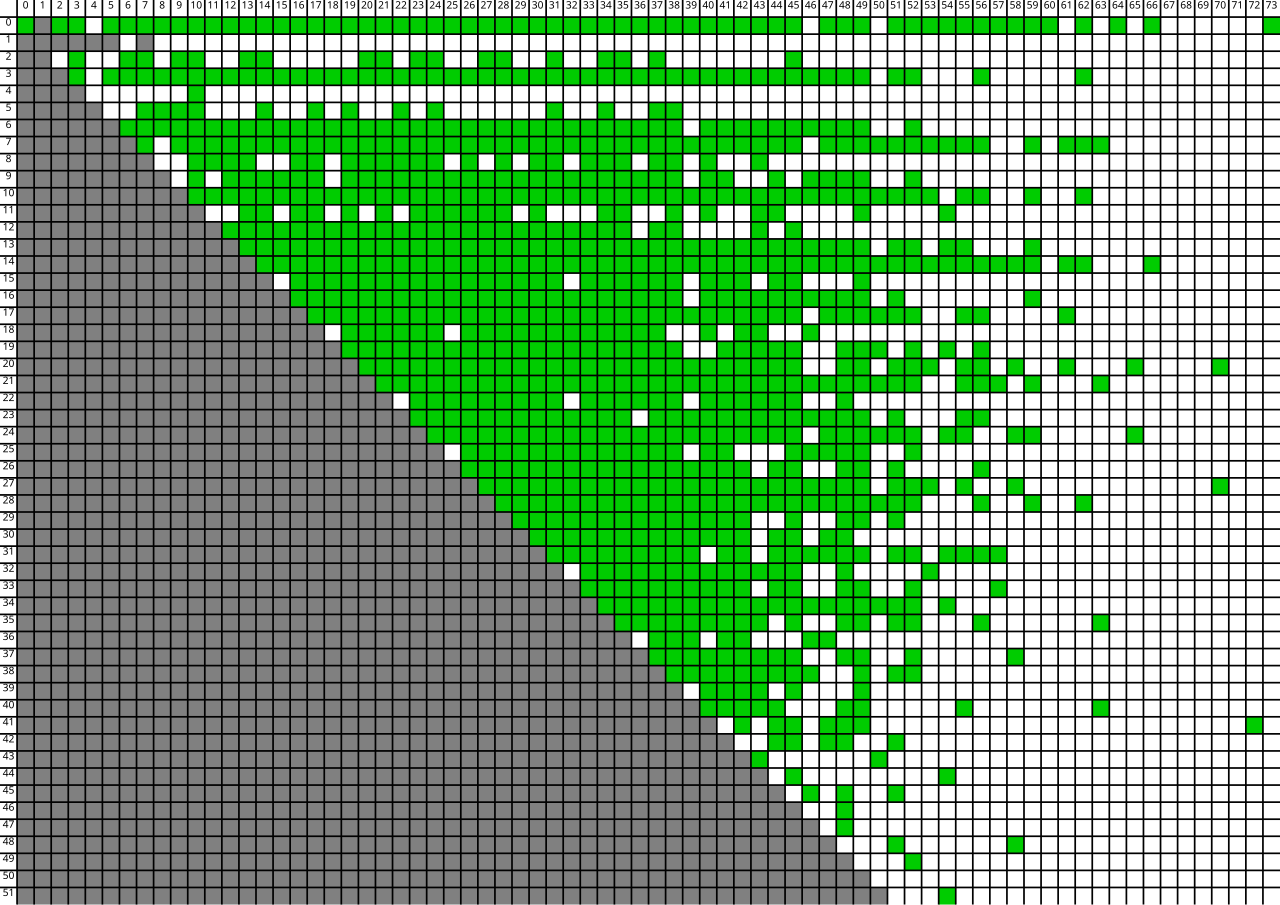
It’s become a fun ritual on NFL Sundays as fans watch games unfold and wonder if the scores might careen toward one of those elusive white squares.
Akabas is not the first to try to apply Scorigami to tennis, but in his recent work, Akabas has ported this concept over to real-time Grand Slam tennis for the first time, tracking and cataloging the scores of all main-draw singles matches in the Open Era (since 1968), learning which ones are most common, uncommon, and never before seen. The project launched for the 2026 U.S. Open and was an instant hit; within the first 24 hours, the @TenniScorigami Twitter account already had more than 5,000 followers—no small feat in this dead-ball era of Twitter.
It’s the sort of thing I’ve wished tennis had had for a long time—NFL scorigami has existed for nearly a decade—and I’m glad Akabas put in the effort to bring it to life.
Akabas and I spoke at the U.S. Open on Tuesday afternoon about his invention, challenges around data-based projects in tennis because of the desert of information, misunderstandings about probability, mixed feelings about AI, and much more.
The Bounces 15 percent off sale is still going during this U.S. Open if you haven’t joined in yet!