


NEW YORK — Before I get to the main meat of this post, which is an interview with Frances Tiafoe’s coach Dr. Mark Kovacs, I want to close the loop on the U.S. Open quarterfinals. Wednesday’s slate was mercifully shorter than Tuesday’s, but still hugely significant, especially for one woman.
While the men’s matches were duds this time, the women’s quarterfinals were momentous and full of the momentum swings that defined the matches from a day earlier.
Elena Rybakina came out for the midday match—her first time playing this early during the tournament—and became bothered by the stark shadows on Ashe, among other annoyances.
Zheng Qinwen left the court after winning the first set—somewhat unusually, as the player in the lead—which allowed the normally poker-faced Rybakina time to vent at her coach Stefano Vukov, blowing off some steam.

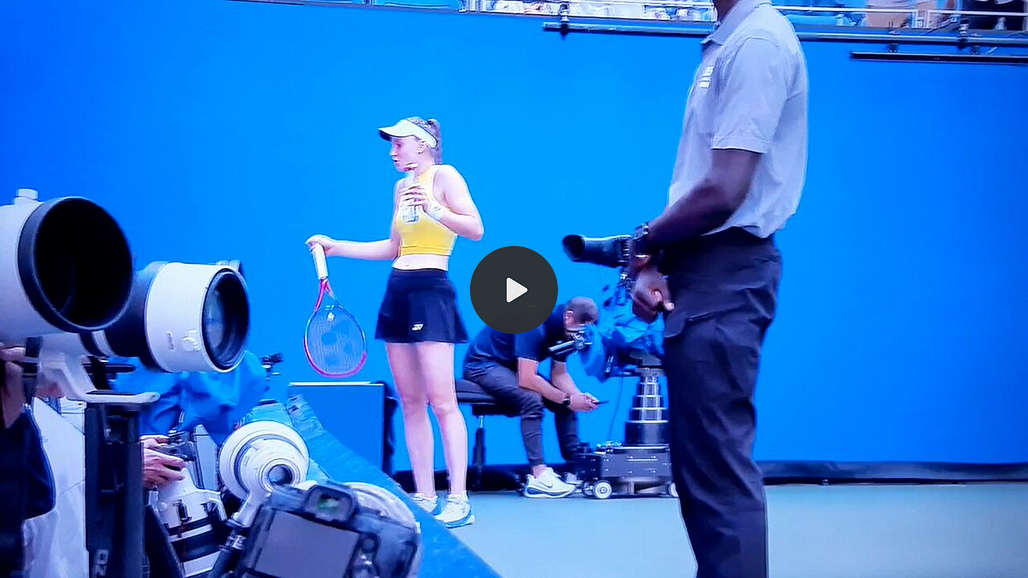
“I was quite negative and didn’t start well in the first set,” Rybakina said later. “I would say that I came and I was just letting the emotions out a bit, telling everything what was on my mind. He just kept me focused and tried to tell for me to remember what we talked before the match, what I should do.”
Rybakina, as is typical, showed fewer emotions once Zheng returned to the court.
“I’m trying to hide it, because yeah, you just don’t want to let the opponent also see your frustration when something is going wrong,” Rybakina said.
Rybakina won the second set quickly but the third was a battle, level at 4-4 before Rybakina secured a late break and consolidated it for a 3-6, 6-1, 6-4 victory.
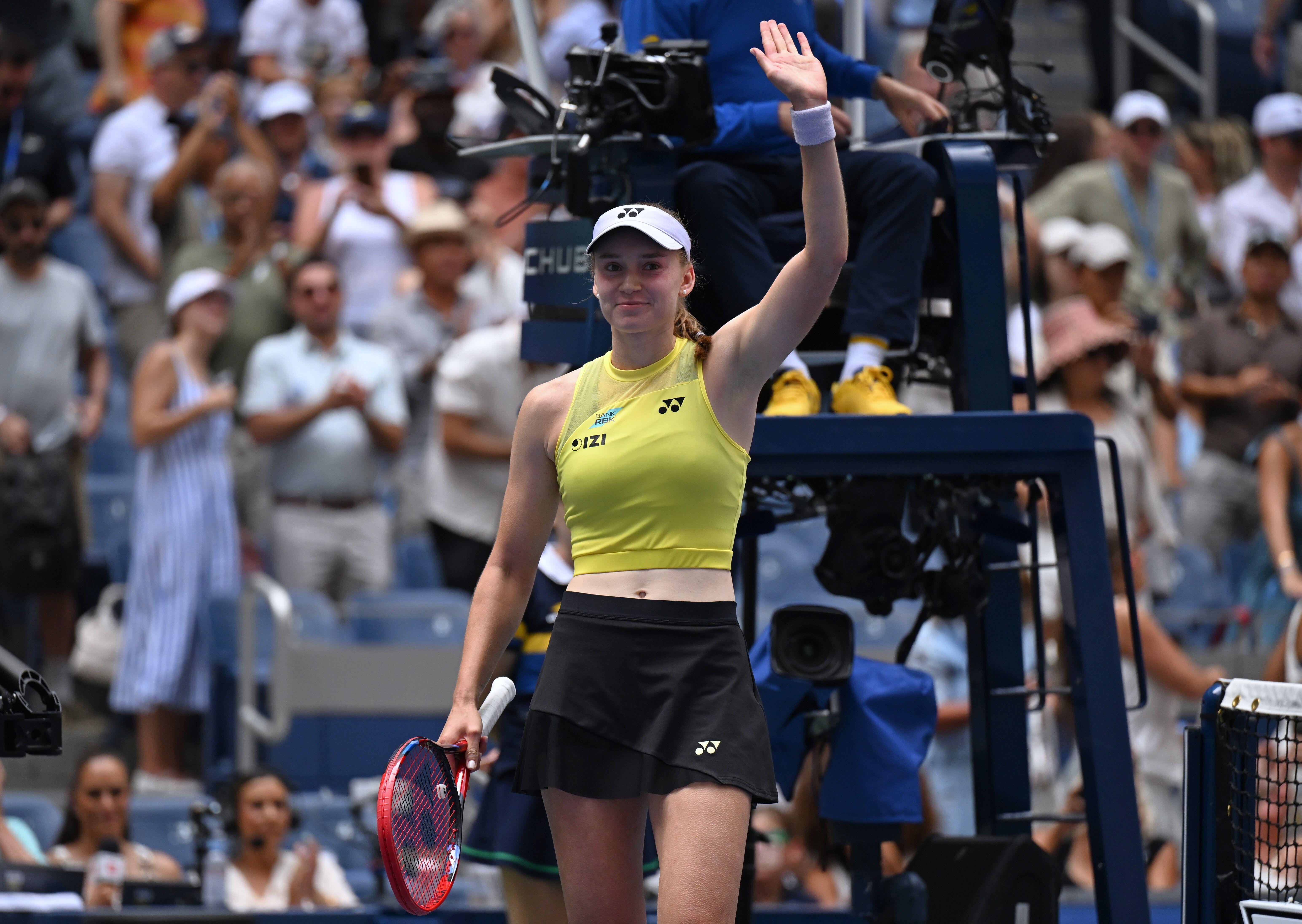
The triumph was, as is typical with Rybakina, also understated on visible emotion, but she was smiling significantly more than usual as she made her post-match press rounds.
Rybakina needed that win, likely, to secure the No. 1 ranking to which she will ascend on Monday; if she had lost, she would’ve needed Zheng Qinwen to win the title, or else the U.S. Open’s eventual champion would’ve taken the top spot.
The fourth quarterfinal was a scrappy one. Coco Gauff, known for her ability to win gritty matches, really brawled with Mirra Andreeva. Both players were well into the negative on their winners-to-unforced errors ratios, but Gauff never blinked, even when staring at two Andreeva match points.
The result is an elite semifinal lineup for Thursday evening: No. 1 Aryna Sabalenka vs. No. 3 Jessica Pegula and No. 4 Coco Gauff vs. No. 2 Elena Rybakina. It’s the first time the top four seeds have reached the U.S. Open women’s singles semifinals since 1975.
The maximally chalk line-up makes sense. There are no major semifinalist debutants in this year’s crop, on either the men’s or women’s side, which is in keeping with recent patterns. This year’s French Open really stands out as a disruptive tournament, results-wise; otherwise, as my chart on first-time major semifinalists shows, there haven’t been many in the last couple of years.
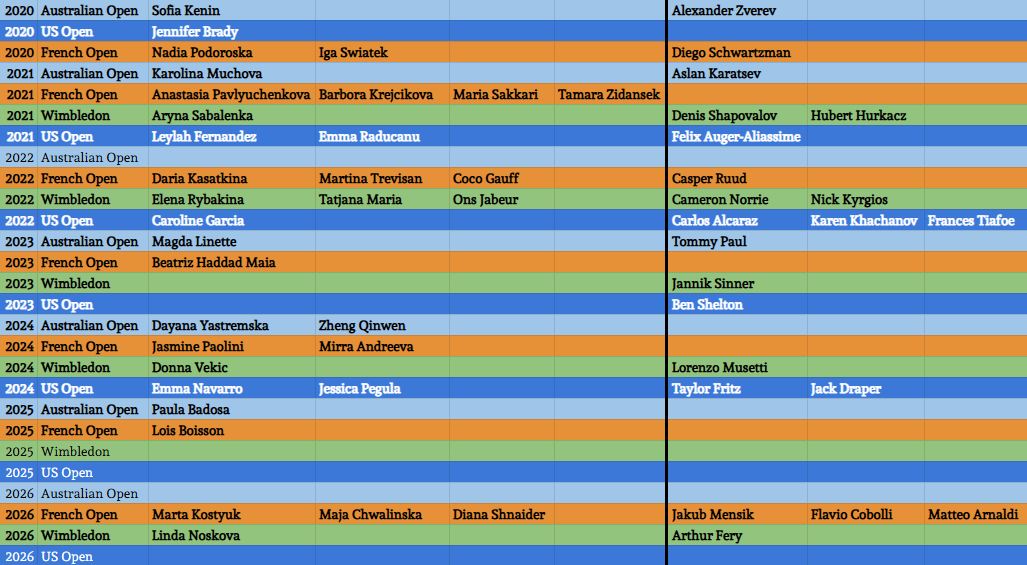
Rybakina is a first-time semifinalist, though, at the U.S. Open; let’s pivot to a guy who is into the Final Four here for a third time.
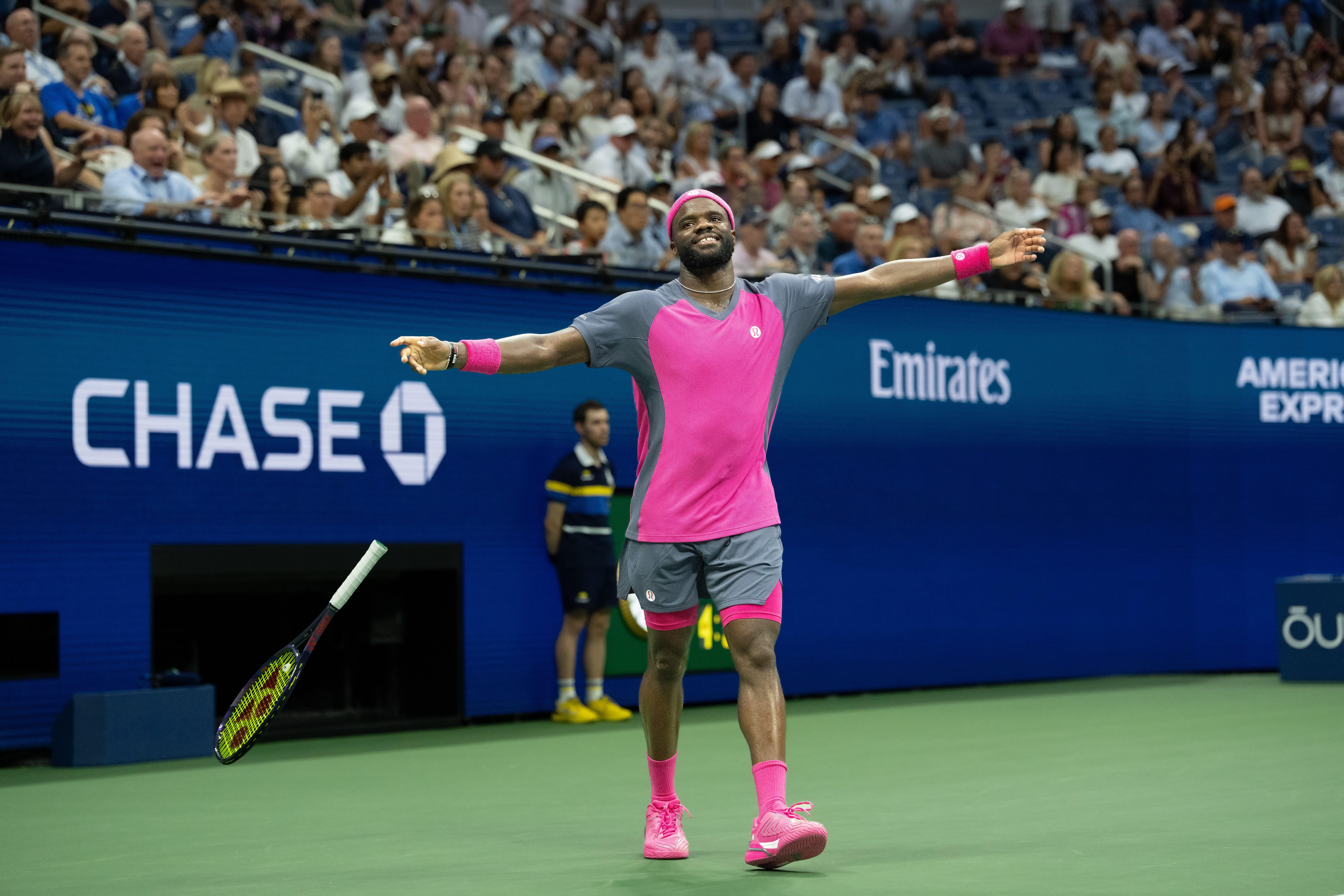
Frances Tiafoe has reached the semifinals of the U.S. Open three times, in 2022, 2024, and 2026. But this time, like Rybakina, his run will be rewarded with a new career-high ranking.
Tiafoe, who was in the Top 10 at No. 10 for a cup of coffee in the summer of 2023, will be up to at least No. 8 in Monday’s rankings, and could further climb to No. 6 by reaching the final or No. 4 by winning the title. He’s in good shape to qualify for the ATP Finals in Turin for the first time, too, at No. 6 in the live race with a couple of months to go.
“I think I’ve been so routine-oriented all year, just continuously on a routine,” Tiafoe said after his quarterfinal win, when I asked him how he’d approach the endgame of this tournament. “Ideally you want to make every day feel the same. Again, winning becomes a habit, so just kind of approach it for what it is.”
All of this was augured in a Bounces story that may have aged better than any other: my pre-Australian Open feature on Tiafoe and the transformation he’d made in the off-season after tough come-to-Jesus talks with his girlfriend, Ayan Broomfield, and his agents.

From January:
“Immediately after the U.S. Open I had a very serious conversation with my girlfriend and my two agents,” Tiafoe said. “It’s one of those things where you’re not really even saying anything; you’re just getting cooked and you’ve kind of got to take it. And don’t argue it, don’t try to fight it—that’s kind of what it was.”
The words were simple and blunt.
“It was very thorough and for a kid to understand—let’s just put it that way,” Tiafoe said. “It was like: you’re either doing it or you’re not, right? Let’s stop making excuses, stop doing this and that. You’re either doing it or you’re not—and it definitely hit home. Hence why I just kind of went dark: trying to figure out what that looked like. Now I’ve got a bunch of clarity and feel ready to go.”
The other big element of that story was Tiafoe making a bold hire: Dr. Mark Kovacs, who had worked in tennis as a performance physiologist and biomechanics researcher, but had never been a lead coach for a top player before.
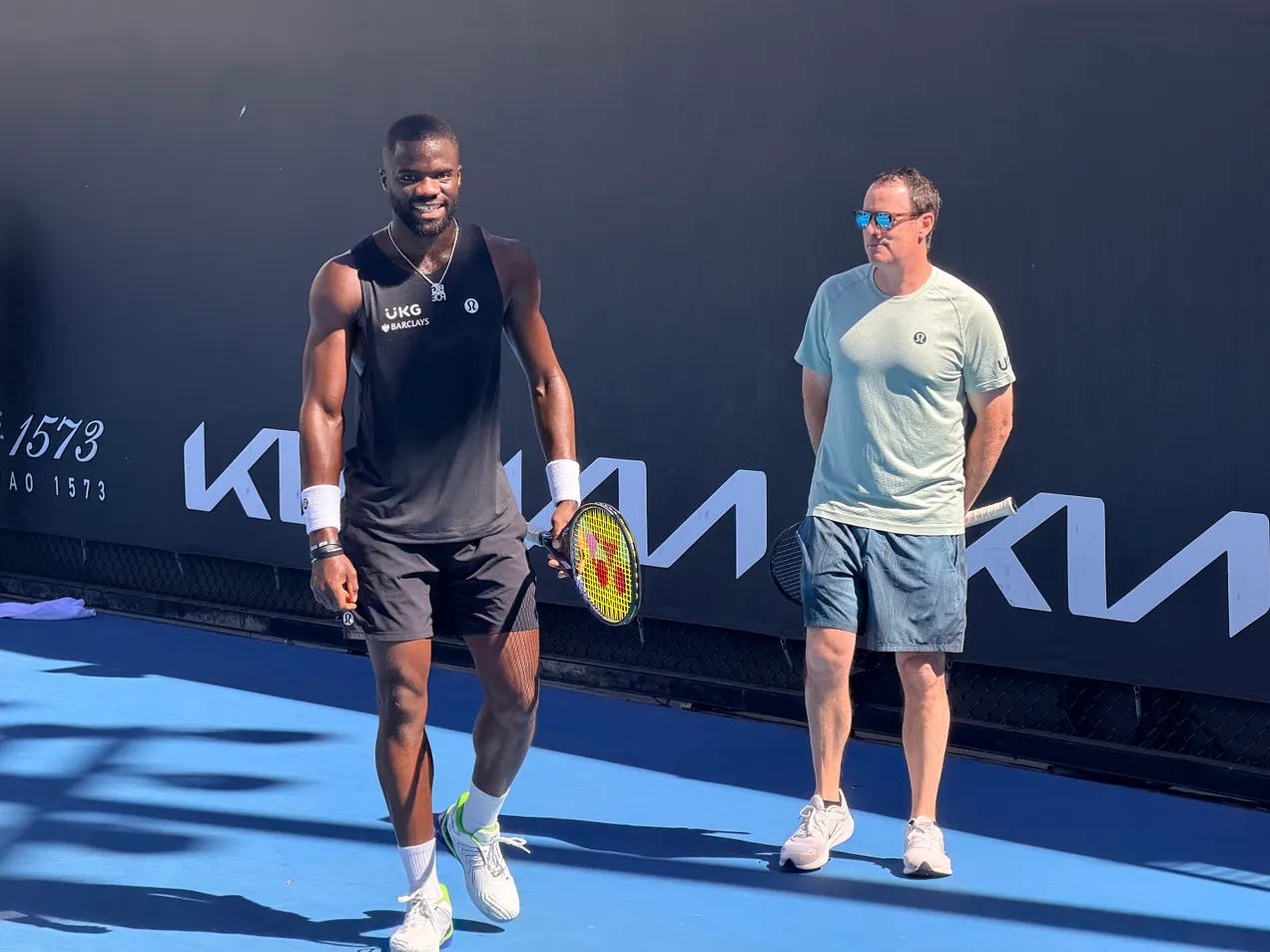
After Tiafoe’s win, I caught up with Kovacs in the corridor outside the men’s locker room in Ashe, and we chatted about the key things Tiafoe has done throughout the year to make it such a success.
To read the interview—and get everything else here during the U.S. Open and beyond—please subscribe to Bounces! It’s still 15 percent off during the U.S. Open, but that time is running out! —Ben