


MIAMI GARDENS, Fla. — I first covered the Miami Open 14 years ago; naturally, most of the names and faces on court are different by now.
But as I watched Sebastian Korda defeat No. 1 Carlos Alcaraz on Sunday, I was struck by a figure from that past chapter who was sitting in Korda’s box, using his hard-earned lessons to help a player in whom he sees his own bumpy journey reflected.
“You always learn more through mistakes than successes, you know? I’ve been through a lot of those emotions. I don’t get to go back and be 18 years old again, but I get to try to pass on some of those positive messages to someone.” -Ryan Harrison
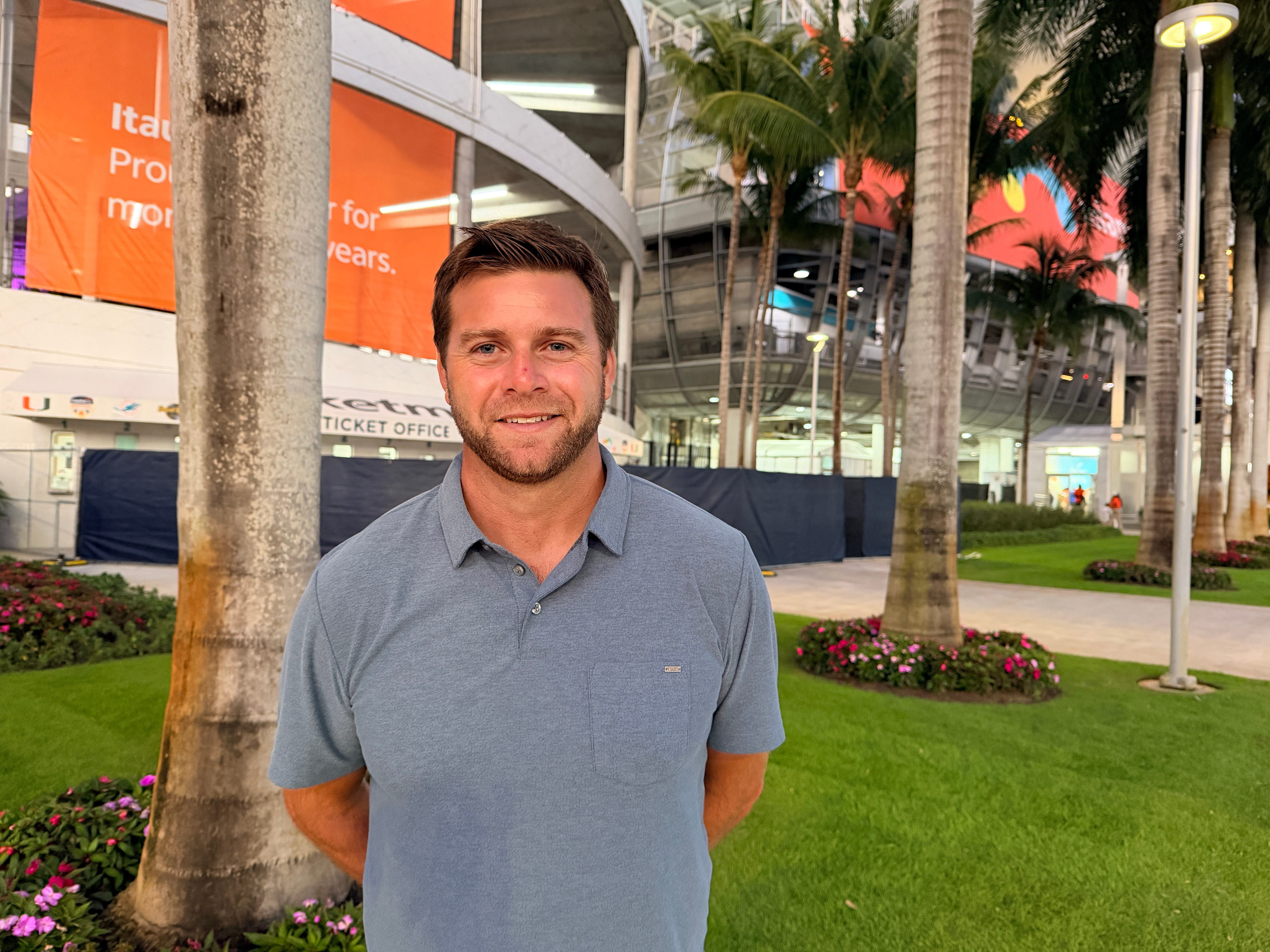
Ryan Harrison was one of the most prominent—and polarizing—young American players in my early years on tour, and reconnecting with him on Sunday, thumbing through various chapters of his tennis biography together, made for a fascinating full-circle moment for me as a reporter.
Some background, for those of you who might not remember Harrison and his journey as vividly after all these years.
When he qualified and won a first-round match in Houston in 2008, Harrison, then 15, became the third-youngest player to win an ATP main draw match since 1990, behind only Rafael Nadal and Richard Gasquet. Ranked 1,277th, Harrison’s win over 95th-ranked Pablo Cuevas instantly made international headlines.
Harrison’s next splash came about two-and-a-half years later, when, again as a qualifier and still only 18 years old, he beat 15th-seeded Ivan Ljubicic in the first round of the 2010 U.S. Open.
With a major title drought already beginning, the crop of American men’s tennis talent was thinner than it ever had been before, and so considerable expectations were placed on Harrison, who was being groomed to be the next standard-bearer.
That made Harrison a protagonist of sorts when I first began covering tennis full-time in 2011, simultaneously a flagpole and a lightning rod for American tennis attention. When wins didn’t come as he and others said they would, his tantrums became the story instead.
In a low point at the 2012 Olympics, a 20-year-old Harrison wound up making a televised apology on the Bravo network for smashing his racquet during his first-round loss.
The focus on Harrison came with perks—sponsorships and a bevy of wildcards—but also considerable, mounting tension as he struggled to shine under a bright spotlight. Ultimately, Harrison couldn’t break through to fulfill the lofty hopes of himself and others. It wasn’t until his 20th appearance in a major main draw that he reached the third round for the first time. He finished with a 2-36 record against top-10 opponents and a career-high ranking of 40th. His lone ATP singles title came at the final edition of the ATP 250 Memphis indoor event in 2017.
Harrison’s best result, unexpectedly, came in doubles, winning the French Open with Michael Venus later that same year. (Harrison’s younger brother, Christian, followed in Ryan’s footsteps by winning his first men’s doubles major this January alongside Neal Skupski in Melbourne.)
Ryan Harrison’s final professional singles match was a qualifying loss at the Cary Challenger in August 2023 at the age of 31.
Since his retirement, Harrison’s baritone has become an increasingly frequent presence on tennis broadcasts; he also began coaching.
His partnership with Sebastian Korda, which first drew my notice during Korda’s march to the ATP 250 Delray Beach title last month, caught my eye immediately.
The more I thought about it, the more I was struck by the parallels between the two: both are the sons of former professional tennis players-turned-coaches; both know what it’s like to be freighted with expectations by a nation that’s gone 22 years and counting since its last major men’s singles title; both were highly-touted American teens for whom top-tier success was not as instant or sustained as hoped.

After Korda’s huge win on Sunday over top-ranked Carlos Alcaraz, Harrison sat down in the Miami Open’s player restaurant for an in-depth, wide-ranging interview with Bounces.
Harrison has always been articulate, but I was struck anew by his self-awareness and perspective, both about his own career and how it went astray, as well as his hopes to get Korda’s career—which similarly has struggled to meet “next big thing” expectations until now—onto its own elusive right track.
“When I was in those positions, I never wanted to be exploding and making a fool of myself on the court; it was kind of a product of all that stress and pressure that you feel.” -Ryan Harrison
To read our entire interview—about 4,000 words on expectation, failure, the Harrison-Korda partnership, and the keys to Korda’s huge win over Alcaraz—please subscribe to Bounces! -Ben