


MELBOURNE, Australia — An oddity emerged in the first round of the Australian Open women’s draw: the first-ever main draw match at a major between two women ranked outside the Top 1000, according to the WTA.
But this historically-lowly match was also, remarkably, the only first-round women’s match where both players should be well-known to casual tennis fans.
On one side was Sloane Stephens, the 2017 U.S. Open champion who had come to Melbourne on a 13-match losing streak that dated back to July 2024. The 32-year-old Stephens, ranked 1,102nd, had arrived a week earlier in Melbourne for the qualifying draw, where she strung together her first three wins in a long time to book a spot in the main draw.
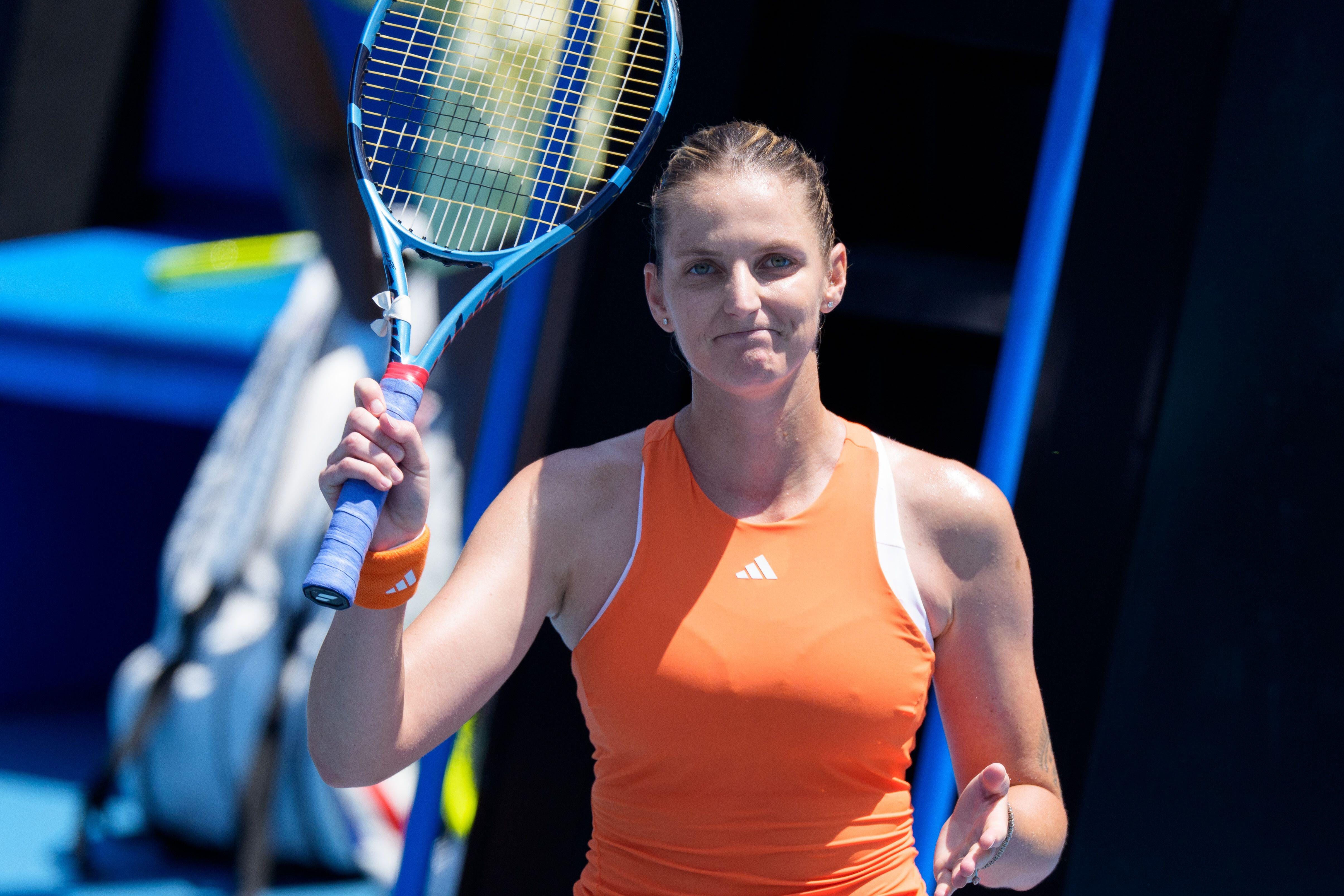
Stephens played well in Melbourne, but lost to a rival she had played way back in the 2010 U.S. Open girls’ singles draw: 1,057th-ranked Karolina Pliskova, a former No. 1 who twice came within a set of winning a major title, falling in the 2016 U.S. Open final and the 2021 Wimbledon final.
33-year-old Pliskova won the match 7-6(7), 6-2, her first win at a major since a catastrophic left ankle injury at the 2024 U.S. Open that nearly ended her career—in large part because of an infection she got from the first of two surgeries she had on the joint. The injury and its lingering complications, she acknowledges, might leave her with very little remaining in her comeback.
“No plans at the moment,” Pliskova said in her press conference of possible play beyond Australia. “I would like to play a little bit more, but everything depends on how I will react. This is the first match, so I don’t know how I’ll be tomorrow. I live from day to day.”
Knowing how long she’s been gone, and that she might not have much time left on tour, I was eager and delighted to talk with Pliskova after her first round win. Pliskova has reliably been one of the best player interviewees of my career, speaking with an unvarnished, unpausing monotone of rapid-fire truths and bluntness.
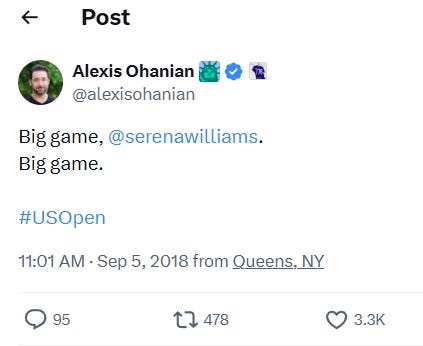
This quality has raised eyebrows at times. Most memorably, when I interviewed her for The New York Times at the 2018 U.S. Open, her quote about Serena Williams—
“O.K., she has all the respect from me, but I can beat her, so I’m not worried about her,” Pliskova added about Williams. “She has a big game, but sometimes she behaves bigger than her game is.”
—became bulletin board material for the Williams camp, and was trumpeted when Serena beat Pliskova in the quarterfinals.
Pliskova talked with Bounces about how her gift for honesty can have high costs—including recent beef with a Wimbledon champion. We discussed the changes that she’s seen on the tennis tour since her career began more than a decade-and-a-half ago, and also discussed how she feels about what she achieved—and didn’t achieve—in a career that is almost entirely in the rearview mirror.
To read this interview, and the rest of this 3,400-word post that includes a look at the best matches to watch on Day 5 of the Australian Open—including my thoughts on Naomi Osaka’s much-discussed outfit—please subscribe to Bounces! Thanks! -Ben