


WASHINGTON — I’ve been writing about Alexandra Eala and her remarkable Filipino following throughout this year here at Bounces; seeing her debut at ATP-WTA 500 Washington has been the latest marker of the 21-year-old’s incredible impact.

Tournament owner and chairman Mark Ein said in a press conference this week that the interest in Eala has been unmatched.


“Over the last month, the ticketing team says at least 80 percent—if not more—of the requests in this tournament are about: ‘When is Alex Eala playing?’” Ein said. “Honestly, I think it’s more, and they just didn’t want to say it was more. But they’re, like, virtually all [asking about her]. It’s not an exaggeration. That’s actually what they tell me.
“When you look at the amazing players here and how many great stars there are, it says something about Alex’s following. Obviously she’s been an icon in the Philippines—but [also] worldwide. There’s obviously Filipinos everywhere.”
Seeing her popularity earlier this year, Ein and his team made it a priority to bring Eala to Washington.


“We’re super glad she’s here,” Ein said. “We love the fans that she brings. But also, just her[self]: she’s such a really nice person and a grateful person and a humble person, so having her here is honestly one of the really great things that’s already happened this year.”
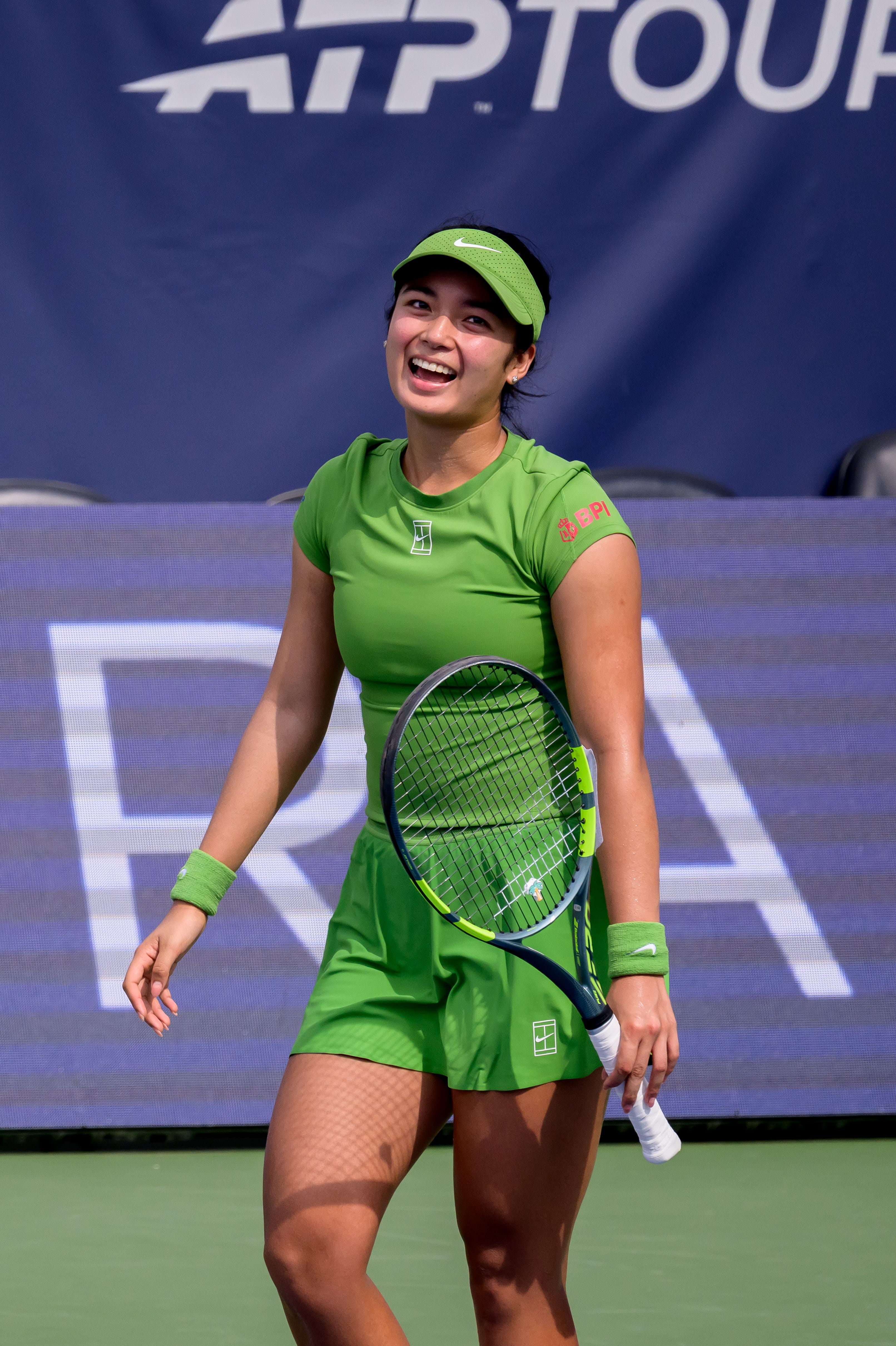
After reaching the quarterfinals in Washington with a win over defending champion Leylah Fernandez, 28th-ranked Eala sat down for a 1-on-1 interview with Bounces about a range of topics, including:
Her decision not to play doubles with Venus Williams, as planned for Washington, to preserve herself physically after a tiring month on grass;
Her accent as a marker of Filipino identity;
Having fans travel from afar to watch her play on tour;
What it was like visiting the Philippines recently;
Critical comments about her family’s financial status and the impact it had on her career;
Staying connected to Filipino culture and comforts while traveling the world.
This interview will be free to read for all, but subscriptions—free or paid—to Bounces are appreciated! -Ben
After discussing a recommendation for good Filipino food nearby, we began.
This interview has been lightly edited for clarity.
Ben Rothenberg, Bounces: I want to ask again about your decision not to play doubles, just because I think it’s a very mature choice to have the chance to play with Venus but be like, ‘I have to say no, I have to look out for my own health and preserving myself.’ Was that an easy decision for you? Did it feel like sort of a breakthrough to get to do that?
Alexandra Eala: It was a difficult decision for me, of course. Playing doubles with Venus is an amazing opportunity—for everybody, you know? I mean it’s amazing; who wouldn’t want to play with Venus? But I mean, it’s exactly what I said the other day: Venus [deserves a fully committed partner]. And especially knowing and having had a glimpse of the mentality she has, you really have to [match it].
And just me as a person, if I play doubles, I want to be able to give it my all and be able to leave everything out on court—and I don’t think I would have been able to do that. And they [Venus and partner Diana Shnaider, who reached the quarterfinals] are still going strong!
Ben Rothenberg, Bounces: Yeah, you must have felt good when they won their first match.
Alexandra Eala: Yeah, I’m really happy about that.


Ben Rothenberg, Bounces: When I was first talking to a couple of my Filipino friends about you, one of the things that a few of them pointed out—I’ve seen this on social media also—is that they really like that you speak with a kind of classic Filipino accent.


Alexandra Eala: OK! Alright!
Ben Rothenberg, Bounces: And they’ve said that a lot of Filipinos, Filipinos abroad, try to sound more American and try to talk in that certain way. But you sound very clearly Filipino, and they said that’s part of why they think that your connection with people is so strong.
Have you ever thought about that, staying authentically rooted to the Philippines, even just in your way of speaking?
Alexandra Eala: I mean, it’s not something I’m really—I mean it’s just how I talk! I don’t know. (Laughs.)
I don’t know. I would say, though, that I think my accent was a lot stronger when I first moved out of the Philippines. But I don’t think it will ever really be, like, American, or fully American. It’s definitely never going be, like, British or Australian—that’s just a whole ‘nother thing. But yeah, I definitely hear it. I definitely hear the Filipino.
Ben Rothenberg, Bounces: Yeah, there’s obviously a huge community of diasporas, and that was just something that I thought was interesting.
Alexandra Eala: Yeah, I think the accent is one thing, and also the humor is another thing that’s very relatable.
Ben Rothenberg, Bounces: I know you get asked this kind of question all the time—and I’m really honestly impressed with how you answer these, because I’ve been in enough tournaments to hear you get similar questions a lot. But knowing that there are hundreds—if not thousands—of people who are making plans to come to a tournament because you’re there, booking flights, buying tickets, and making this big effort—how does that feel?


Because it is a really unique thing that most players—certainly at your age and your relative newness on tour—don’t get. So do you try not to think about that? Do you process it and be grateful? Or do you not think about it, so you don’t get overwhelmed? How do you place that mindset?
Alexandra Eala: Well, it is still quite a new thing for me to hear that.
I’ve known that a lot of people come out when they’re in the city, but it’s sort of a new thing when a lot of people travel from different cities to watch me.
I mean, I guess it’s like it’s a concert. Like I flew, for example, to Sweden for the Bad Bunny concert. And if Bad Bunny didn’t feel well that day [and didn’t perform], I’d be disappointed, yeah, but at the end I’d have to deal with it.
Yeah, and in the end I am grateful. Like I say all the time: I’m grateful for their support, but [there are] also mature [scheduling] decisions that I have to make, you know? This is my job, I am a professional, so I have to look at myself and I have to invest in myself, as well, so I take these decisions.
When I’m out on court, it’s a decision to be out there. It’s a decision for me to fight, it’s a decision for me to endure. So I also have to think about what’s best for me.

Ben Rothenberg, Bounces: When you were back in the Philippines recently, was there something that you noticed about your presence there, or how people were reacting to you, that made you most like, ‘Oh wow, this is different. This is new.’?
Alexandra Eala: Yeah! Yeah. It’s weird. On one hand, I didn’t have time to really just go out and do anything. But I feel like if I did, it would be a very different experience than what I had growing up.
Ben Rothenberg, Bounces: It wasn’t doable?
Alexandra Eala: Yeah, I don’t think it was doable. And it was a nice experience, it was a nice week, but also it was a lot. So if I did that—just went out with a friend, if I had no security or something—let’s say it’s uncharted waters for me.
But yeah, it’s eye-opening every time I come back, because it kind of gets into a bigger and bigger scale. Which, it’s a really good thing. It’s a good problem to have. But I’m still, you know, finding my relationship with that.

Ben Rothenberg, Bounces: One thing I’ve also seen on social media in conversations about you—and I’m sorry to hit you with all this social media stuff: I’ve seen some fans debating about your parents’ background, and having them have relatively successful jobs [Eala’s mother, notably, was chief financial officer at Globe Telecom]. This is also something that comes up a lot with some American women on tour.
That leads to some people saying, ‘Oh, that made it so easy, because they had money, and so it was easier for her than the average person in some way.’
Knowing enough about tennis, I know it’s not ‘easy’ for anybody, not automatic for anybody. But I’m curious if you’ve heard that kind of talk, and what you make of those sorts of framings of you and your family?
Alexandra Eala: Yeah. Well, for one, my parents worked super, super hard for what they have. And I can tell you that my parents are two of the most hard-working people I know, right? And if I get my work ethic from anyone, it’s from them.
I mean, I grew up comfortably, which, I’m thankful to my parents for that. Thanks, mom and dad! [Laughing fist pump.]
I mean, of course, the journey would have been easier for me as compared to someone, let’s say, who’s in poverty. Of course, if you’re financially struggling—in general, in life—if you are financially struggling, it’s going to be more difficult for you than if you were financially stable or financially covered.
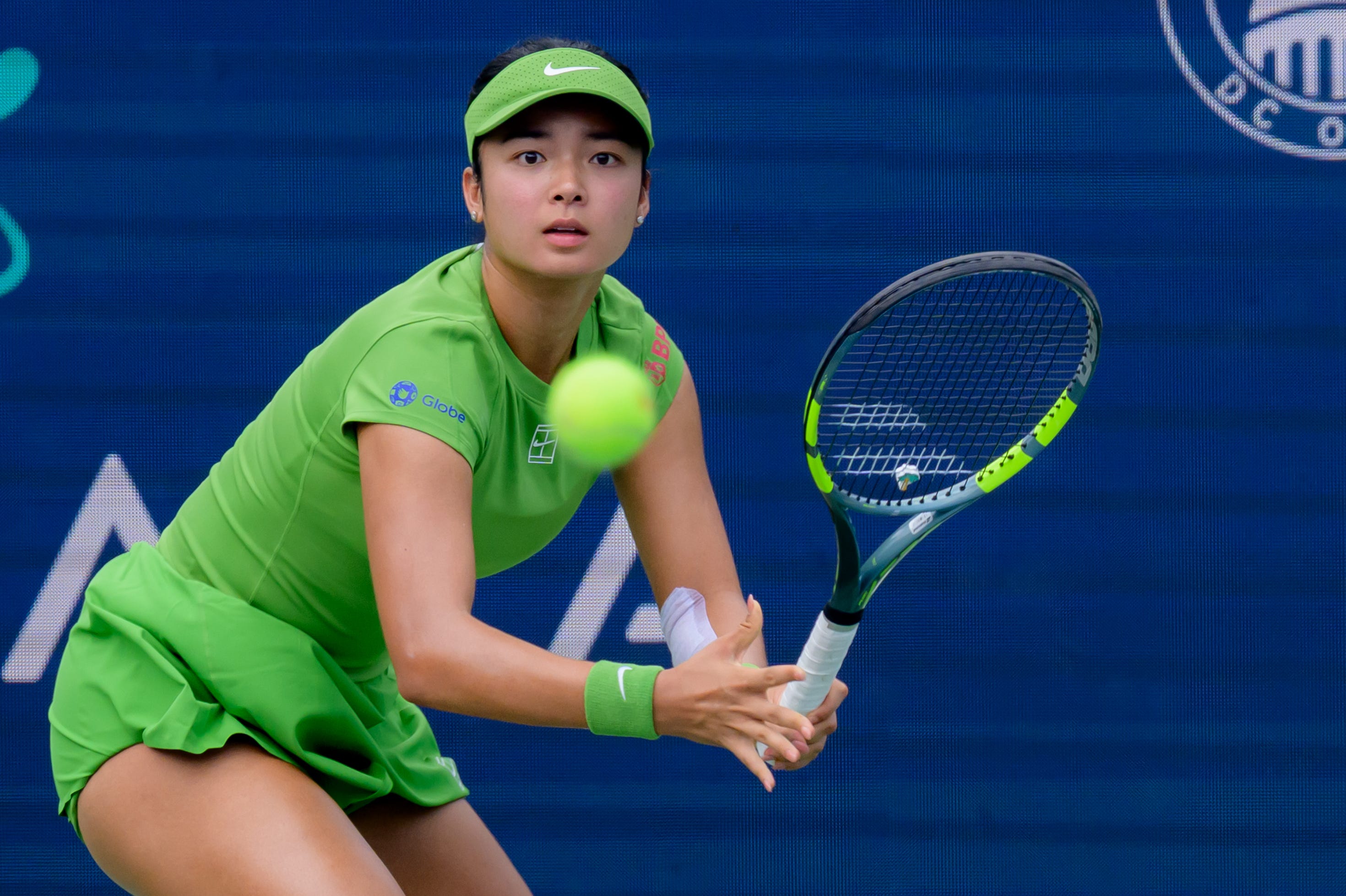
But that definitely does not take away from the fact that I worked hard, or it does not take away from the obstacles that I’ve had to face. And at the end of the day, the ball doesn’t know who your parents are. The ball doesn’t know how much money you have, right?
Yeah, that’s I think, enough said.
Ben Rothenberg, Bounces: That was really well said, I think. And I’ve heard similar things about like Jessica Pegula’s family which owns big businesses. But it still couldn’t be easy for her to be Top 5 in the world. Nothing is given here.
Alexandra Eala: Yeah. I mean, I’m super grateful for everything my family has provided for me, yeah.
Ben Rothenberg, Bounces: And last thing, just because we were talking before we started about the Filipino restaurants in DC: in terms of trying to find home comforts, how much is that something you feel like you need or benefit from on the road? Or how much have you learned not to have to rely on that?
Like I know, for example, the guys from Argentina travel with their own mate [the Argentine beverage].
Alexandra Eala: Oh yeah, I’ve seen that.
Ben Rothenberg, Bounces: And it’s very important to them to have it on the road. I don’t know, do you have anything like that that you look out for?
Alexandra Eala: I mean, you know what? The amount of Filipinos that I encounter traveling the world, they are the pieces of home that I see, and that I feel.
Sometimes I’m not able to go to those Filipino restaurants, for one reason or another, but I’m interacting with Filipinos all the time. So yeah, they’re my pieces of home.

Thanks for reading Bounces! To keep up with coverage of Alex Eala and the rest of the tennis world, please subscribe!
I love that you asked about restaurants. It made my heart swell to see her dining at Donia when she was in London. Donia's owner Florence Mae Maglanoc is only about a decade older than Alex Eala and is killing it in her field too
It's not her fault that she comes from a wealthy background but absolutely it helps for a young person getting started in tennis e.g., compared to basketball where there is a whole system for identifying and bringing up people with talent most of whom do not come from wealthy backgrounds. So "the ball doesn't know who your parents are" is true and she has every right to make that comment, but it's obviously a lot more complicated than that.
That said, she comes across as a delightful person who is handling a high-pressure situation gracefully and who clearly has genuine tennis talent.